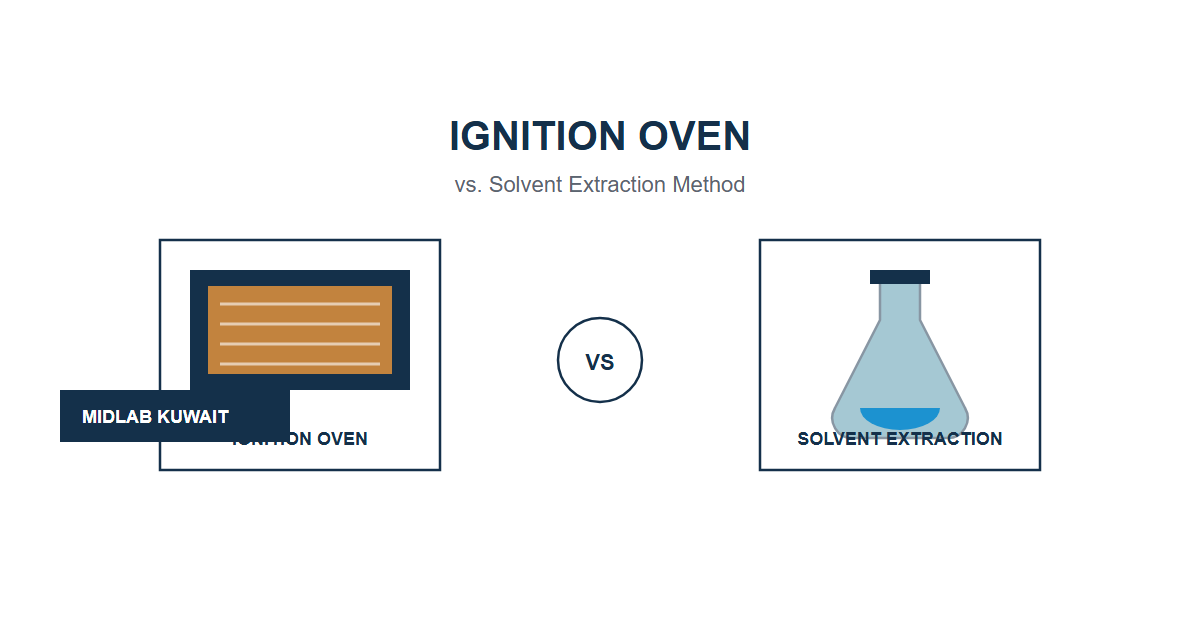
Determining asphalt binder (bitumen) content is one of the most frequent quality-control tests run in Kuwait's asphalt plants and paving labs. Two methods dominate: the ignition oven and solvent extraction. Both are internationally recognized, but they differ enough in speed, safety and running cost that the right choice depends on how your lab actually operates.
Asphalt Ignition Oven (ASTM D6307)
An ignition oven, such as the Troxler NTO, burns off the asphalt binder from a mix sample at high temperature and calculates binder content from the mass loss. It is widely used because it:
- Delivers results in under an hour, versus several hours for extraction.
- Uses no flammable or toxic solvents — safer to store and operate.
- Produces far less hazardous waste to dispose of.
- Requires a one-time aggregate correction factor test, since some aggregate types lose mass on ignition and would otherwise skew results.
Solvent Extraction (ASTM D2172)
Extraction dissolves the binder out of the mix using a solvent, then measures the binder content from the dissolved solution or the mass of the remaining aggregate. It remains relevant because it:
- Recovers aggregate largely unaltered — useful when the aggregate gradation itself needs to be analyzed afterward.
- Does not require an aggregate-specific correction factor.
- Is still specified by some contract documents and legacy standards.
Its drawbacks are the use of solvents (historically trichloroethylene, now more often safer alternatives), longer test time, and the cost and handling of hazardous waste.
Which Should a Kuwait Asphalt Lab Choose?
Most high-throughput asphalt plants and contractor labs in Kuwait favor the ignition oven for daily quality control because it is faster, safer to run repeatedly, and cheaper to operate once the aggregate correction factor is established. Extraction still has a place where contract specifications require it, or where recovered aggregate gradation is needed for further testing.
Frequently Asked Questions
Which is more accurate: ignition oven or extraction?
Both methods are accepted by international standards (ASTM D6307 for ignition, ASTM D2172 for extraction) when correctly calibrated. The ignition oven needs a correction factor established per aggregate source to match extraction-level accuracy, since some aggregates lose mass on ignition.
Why do most labs in Kuwait prefer the ignition oven method?
The ignition oven (such as the Troxler NTO) avoids the use of flammable, hazardous solvents like trichloroethylene, delivers results in under an hour, and produces less hazardous waste — making it faster and safer to run day-to-day in a busy asphalt lab.
Does MIDLAB supply both ignition oven and extraction equipment in Kuwait?
Yes. MIDLAB supplies the Troxler NTO asphalt ignition oven and Matest solvent extraction equipment in Kuwait, along with guidance on correction-factor testing for local aggregate sources.
Troxler NTO Ignition Oven · Asphalt Testing Equipment · Super Pave Mix Design Method