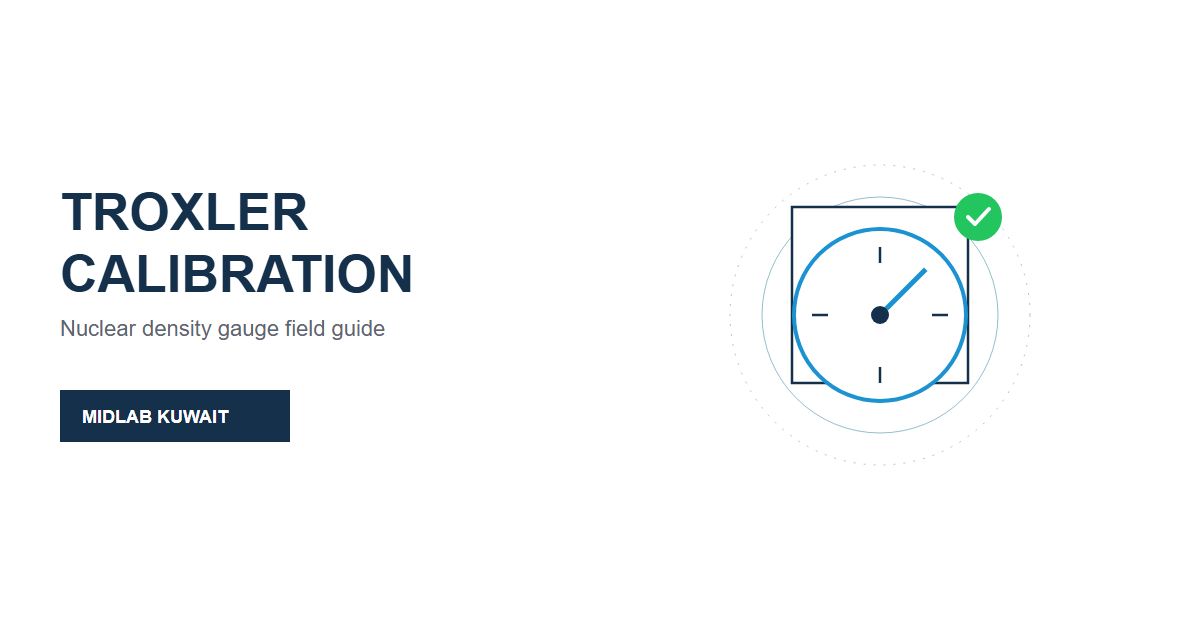
Accurate compaction testing depends on one thing above all: a properly calibrated gauge. A Troxler nuclear density gauge that drifts out of calibration can pass bad compaction or fail good work — either way, it puts a road, runway or foundation project in Kuwait at risk. This guide covers what calibration actually means for Troxler gauges, how often it needs to happen, and how to keep a gauge reading accurately in Kuwait's climate and field conditions.
Daily Standard Count vs. Full Calibration
These are two different things and both matter:
- Standard count — a quick reference reading taken on the gauge's own standard block before each day of testing. It does not recalibrate the gauge; it simply confirms the gauge is still reading within its expected range. Any drift outside tolerance means the gauge should not be used until checked.
- Full calibration — a factory or accredited-lab procedure that re-establishes the gauge's density and moisture calibration curves against certified reference blocks. This is the deeper calibration that standard counts are checked against.
How Often Should a Troxler Gauge Be Calibrated?
Troxler recommends a full calibration at least every 24 months, though local regulatory requirements for radioactive source-bearing equipment may set a shorter interval. On top of that fixed schedule, operators should run:
- A standard count every day before testing begins.
- A new standard count if the gauge is dropped, serviced, or shows inconsistent readings.
- A source leak test on the schedule required for licensed nuclear gauges.
Moisture-Density Standard Blocks
The reference block supplied with the gauge is the anchor for every standard count. Keep it in the same location and orientation each time, away from other radioactive sources or dense materials that could interfere with the reading, and let the gauge warm up per the manufacturer's procedure before taking the count.
Calibration in Kuwait's Field Conditions
Kuwait's summer surface temperatures and long outdoor working hours on asphalt and earthworks sites can affect any electronic measuring instrument. A few practical habits protect gauge accuracy on Kuwait projects:
- Store the gauge in its case, in shade, between readings rather than leaving it on hot asphalt or in direct sun.
- Let the gauge acclimatize to ambient temperature before the daily standard count if it has been in an air-conditioned vehicle.
- Keep batteries charged — heat accelerates battery degradation, and a low battery can affect reading stability.
- Log every standard count so drift trends are visible before they become a failed calibration.
MIDLAB's Support for Troxler Equipment in Kuwait
As the Kuwait supplier of genuine Troxler testing machines, MIDLAB provides local guidance on standard counts, calibration scheduling and troubleshooting so labs and contractors can keep their nuclear and non-nuclear density gauges audit-ready.
Frequently Asked Questions
How often should a Troxler nuclear density gauge be calibrated?
Troxler recommends a full factory calibration at least once every 24 months, or per the schedule required by your local nuclear regulatory authority. In addition, operators must run a daily standard count before each day of field use to verify the gauge is reading consistently.
What is a standard count on a Troxler gauge?
A standard count is a short reference reading taken on the gauge's reference standard block before each day of testing. It confirms the gauge's density and moisture counts are within the expected range compared to its calibration baseline, catching drift before it affects field results.
Does MIDLAB calibrate Troxler gauges in Kuwait?
MIDLAB, as the Kuwait supplier of genuine Troxler equipment, provides local technical support and guidance on standard counts, calibration scheduling and troubleshooting for Troxler nuclear and non-nuclear density gauges used across Kuwait.
Can high ambient temperatures in Kuwait affect gauge accuracy?
Extreme heat and prolonged direct sun exposure can affect electronic components and battery performance over a working day. Storing the gauge in shade between readings and letting it stabilize to ambient temperature before the daily standard count helps maintain accuracy on Kuwait job sites.
See the full Troxler testing machine range · How to choose a testing equipment supplier in Kuwait